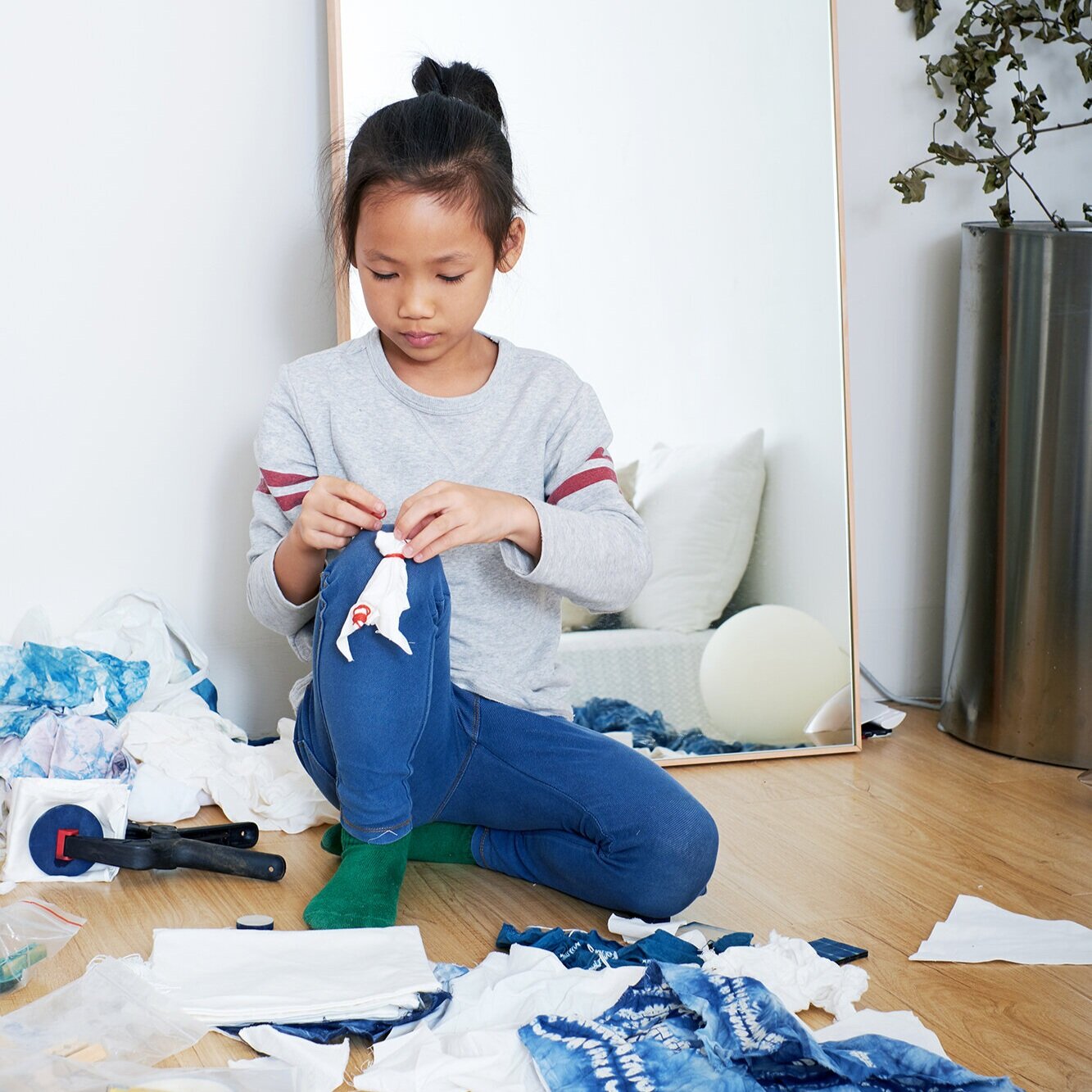
Why play is serious business
It might look like building, splashing, digging or making up stories, but play
is doing remarkable work. We look at how child-led exploration helps develop language, confidence, creativity, problem-solving and relationships
— and why protecting time for play matters.

A collection of wooden blocks becomes a village. A puddle becomes an experiment. Two children with a blanket begin an elaborate discussion about who lives in their den.
Watch young children playing, and you will see ideas taking shape. They test possibilities, repeat discoveries, draw on their experiences, and find ways to bring other people into their imagined worlds.
All of this brings pleasure and purpose. Play gives children opportunities to explore what interests them, practise emerging skills and discover what they can do.
Following an idea
When children have some choice over their play, they can follow a question that matters to them. Will this fit? Where does the water go? How can I make the bridge stay up?
A child building a ramp might change its height, choose a different car and try again. Each attempt gives them something to notice and a reason to adjust their approach.
England’s Development Matters guidance recognises the importance of children developing their own play and exploring independently. It also describes the adult’s role in preparing an environment and sensitively extending learning. [1]
Child-led play and thoughtful adult support work together. An adult might offer another piece of guttering, introduce a useful word or simply give a child time to keep going.
A reason to communicate
Play gives children something they want to communicate about. A pretend café needs orders. A rescue mission needs a plan. A baby rolling a ball towards an adult invites a response through movement, expression or sound.
These exchanges offer opportunities to listen, gesture, explain and experiment with words. The Department for Education highlights conversation, storytelling and role play as ways to develop vocabulary and language, supported by adults who listen and contribute thoughtfully. [1]
Sometimes a small addition opens up an idea: “Your teddy looks hungry. What could we make?” The conversation can grow from the child’s response.
Trying, changing and trying again
Play often involves manageable challenges. A tower falls. A puzzle piece refuses to fit. The fabric roof of a den keeps slipping.
With encouragement and appropriate help, children can explore another approach. They have opportunities to make choices, experience frustration and enjoy the satisfaction of finding a solution.
Harvard University’s Centre on the Developing Child explains that games and playful activities can help children practise attention, working memory and self-control. These abilities support holding an idea in mind, following a plan and adapting what we do. [2]
The experience matters even when there is no finished creation to take home. A child may spend a long time comparing, testing, and reconsidering before deciding to begin again.
Making room for other people
Shared play brings different ideas together. One child wants the shop to sell apples. Another thinks it should sell dinosaurs. Working out what happens next can involve listening, explaining, negotiating and making space for someone else’s suggestion.
These moments can be difficult and delightful. Young children are still learning how to share resources, enter a game and express disagreement. Adults can help by naming the problem, modelling kindness, and supporting children as they work toward a solution.
Play creates opportunities to practise relationships, with someone nearby to help when needed. The American Academy of Paediatrics’ review of play describes its contribution to language, social development and relationships with caregivers and peers. [3]
The adult’s thoughtful role
Supporting play calls for close attention. Sometimes a child needs uninterrupted time. Sometimes they need help to get started, a new resource or an adult alongside them. A well-judged question can extend an investigation; too many questions can interrupt it.
Development Matters describes a balance of approaches, including independent play, adult modelling, guided learning and direct teaching. [1] Knowing the child helps adults decide what kind of support will be useful.
For families, this can be reassuring. You do not need a constant supply of elaborate activities. Familiar objects, a little space and an interested companion can offer plenty to explore.
Why time matters
An idea needs room to develop. Children may return to the same materials, repeat an action or revisit a story many times, noticing something different as they go.
Protecting time for play allows space for this repetition and exploration. It also gives adults a chance to observe what captures a child’s attention and where a little support might help.
At St Swithun’s Nursery & Preschool, we aim to nurture curiosity and growing independence through thoughtful care, engaging experiences, and opportunities to explore. Play is an important part of that early learning.
Follow their curiosity.
Children’s interests offer useful starting points for exploration and conversation.
Offer support thoughtfully.
A resource, a few words or a helping hand can move an idea forward.
Protect time for enjoyment.
Play matters as a valuable part of childhood and an opportunity to learn.

Notice the learning.
Building, pretending and investigating can involve language, planning, creativity and problem-solving.
Make space for repetition.
Returning to familiar play gives children opportunities to practise and discover more.
References and further reading
[1] Department for Education, Development Matters. Guidance on early learning, including independent exploration, communication and the adult’s role in play.
[2] Center on the Developing Child at Harvard University, Brain-Building Through Play: Activities for Infants, Toddlers, and Children. Playful activities that support attention, working memory and self-control.
[3] Yogman, M. et al. (2018), The Power of Play: A Pediatric Role in Enhancing Development in Young Children, Pediatrics, 142(3).
Discover more at
St Swithun’s
Explore Our Learning to discover the thinking behind our provision, or continue reading our journal articles on creative exploration, stories, language, and outdoor learning.
To see our Nursery & Preschool for yourself, drop us a line to arrange a time to come and meet us.