


Just one more story:
how stories and conversation build language
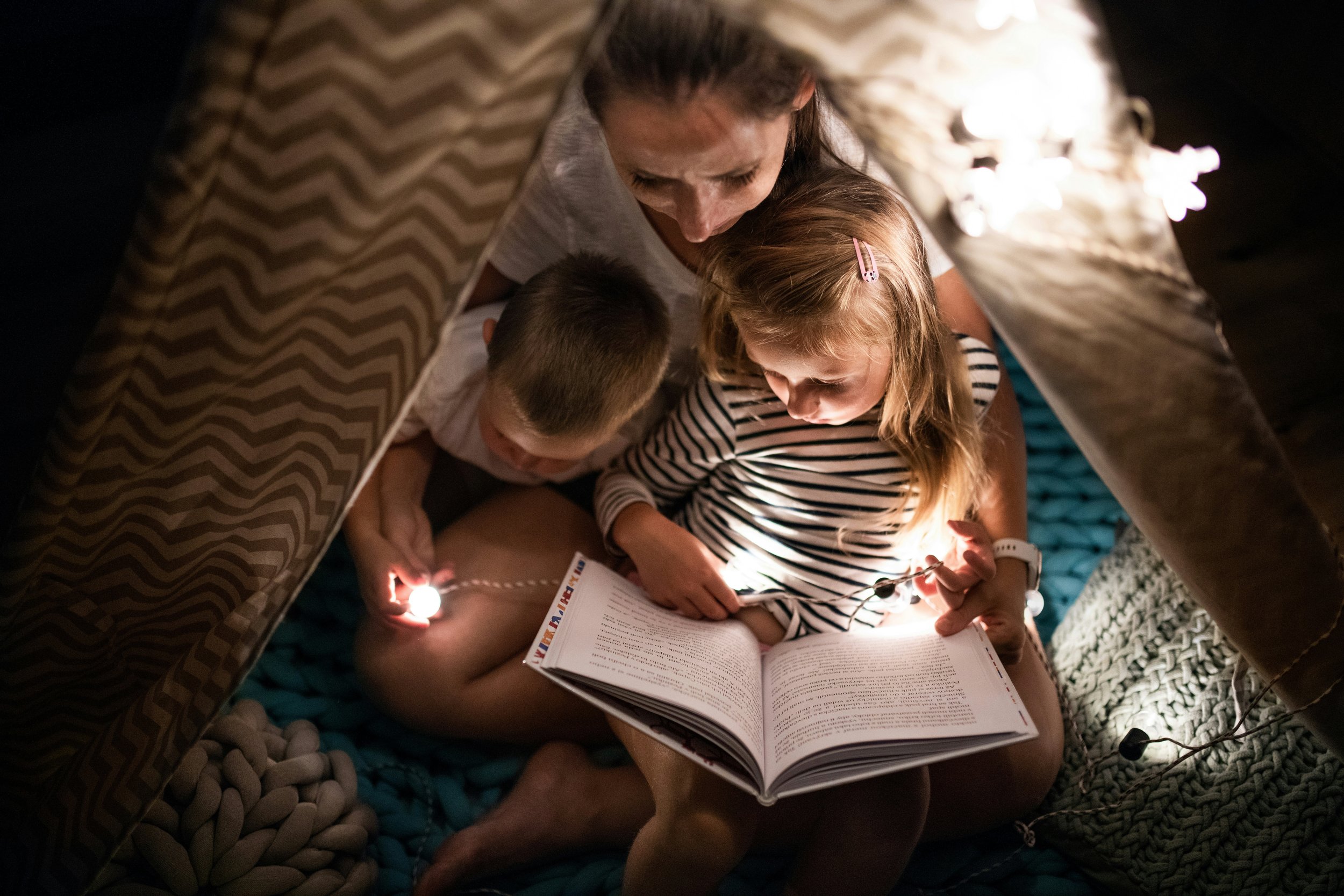
The same book. The same bear. The same page that was apparently just as funny yesterday. Children’s enthusiasm for repetition can test an adult’s stamina. But returning to a familiar story gives a child opportunities to anticipate, join in and gradually make the language their own.
The conversation around the book matters too.
A child points at a picture. An adult notices and responds. The child adds a sound, a gesture or a question. Together, they build something neither would have created alone.
Harvard’s Center on the Developing Child describes responsive exchanges between children and caring adults as “serve and return”. These back-and-forth interactions help support early development.
They happen far beyond story time: while putting on wellies, noticing a bird or discussing why somebody’s banana has broken in an entirely unacceptable place.
The Education Endowment Foundation also identifies communication and language approaches as an important part of effective early years practice.
At St Swithun’s Nursery & Preschool, we make room for books worth revisiting and conversations worth following. We give children time to respond, add words to what interests them and listen to what they are trying to tell us.
Communication includes gesture, expression and movement as well as speech. Every child needs to know that their contribution will be noticed.
Try together: follow your child’s attention during a story. Comment on what they notice and leave a pause. There is no need to turn every page into a question.
Meet the people who will take time to listen.
Further reading: Harvard: serve and return · EEF: communication and language.